
Community
Mandela Barnes sues Milwaukee Journal Sentinel for defamation
By Marcus Chen
Advertisement · Why this ad?
Marcus manages the day-to-day editorial workflow across all brands, coordinating coverage assignments and ensuring editorial standards are met. He previously served as city editor at the Pioneer Press and holds a degree in Political Science from Carleton College.
More from Marcus →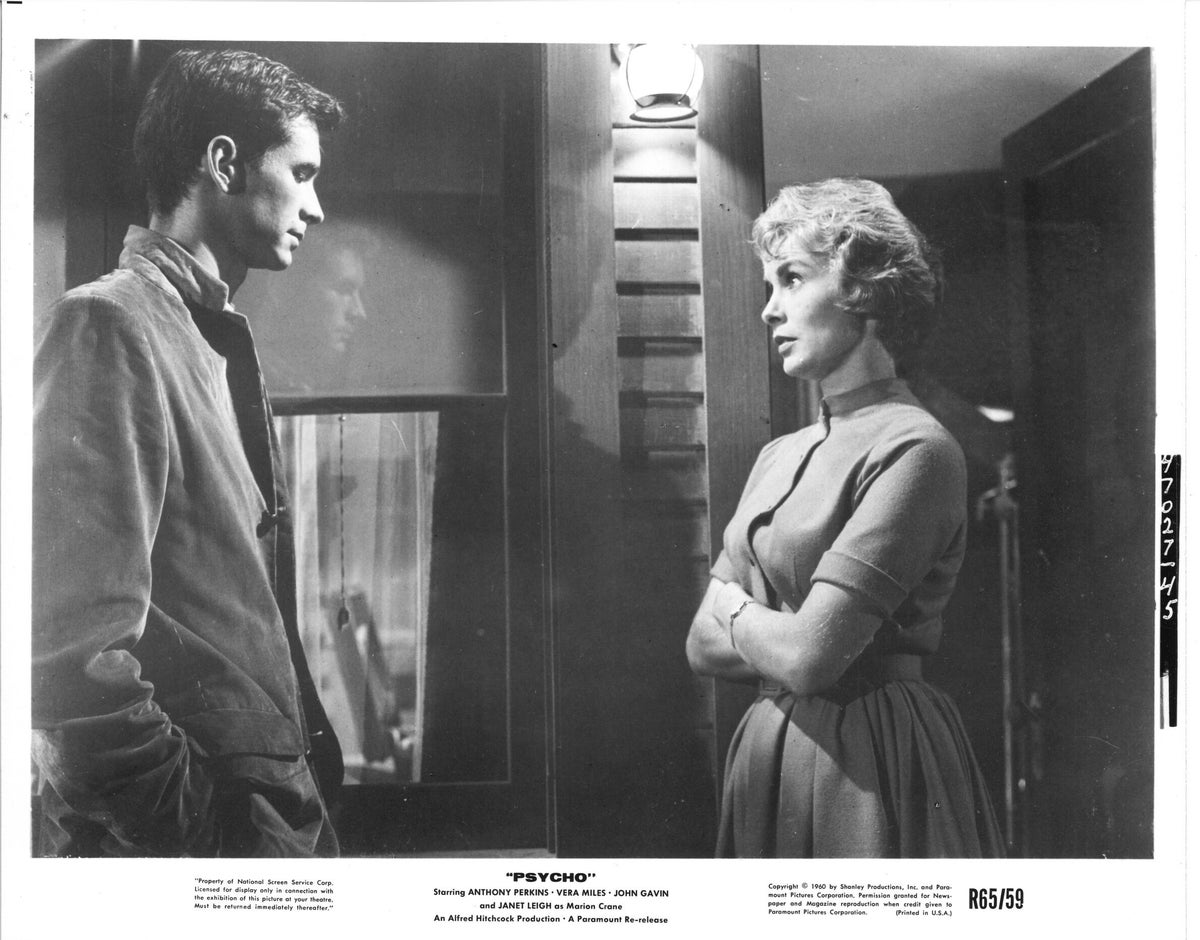
The chilling image of Norman Bates, forever etched in American cinema, owes a debt to Wisconsin. Robert Bloch, the author of the iconic novel “Psycho,” spent much of his life in our state, and it was here, amidst the quiet landscapes and small-town dynamics of central Wisconsin, that the seeds of his most famous creation were sown. While I’d long known Bloch’s name as the author of “Psycho,” I recently discovered the depth of his Wisconsin connection through a conversation with Bill Gillard, an English professor at the University of Wisconsin-Oshkosh, and his new book, “Psycho Century: Robert Bloch, American Horror Master.”
Gillard’s work sheds light on how Bloch’s early experiences in Milwaukee and his later years in Weyauwega shaped his writing, ultimately leading to the creation of a character and story that would redefine the horror genre. Understanding the influence of Wisconsin on Bloch’s work allows us to appreciate not only his literary legacy but also the subtle ways our own communities can inspire both beauty and darkness.
Born in Chicago, Bloch’s family relocated to Milwaukee when he was young, where his mother worked at the Jewish Settlement House. Gillard explained that Bloch’s fascination with scary stories began early, sparked by a formative experience at the cinema. “The movie he picked was ‘Phantom of the Opera’ with Lon Chaney, which terrified Bloch,” Gillard recounted. “Bloch was sitting there in the dark all by himself, this small child watching the most frightening movie ever created. Bloch said he didn’t sleep for a month after that … his DNA was altered by seeing that film.”
Just a year later, a trip on a train led to another defining moment. His Aunt Lil allowed him to choose a magazine, and the ten-year-old Bloch selected the October 1927 edition of “Weird Tales,” featuring a story by H.P. Lovecraft. “He was amazed,” Gillard said. “He read it again and again and again. He couldn’t believe how great this story by Lovecraft was.” The influence of Lovecraft's cosmic horror would become a cornerstone of Bloch’s early writing.
Inspired by Lovecraft, Bloch quickly established himself as a prolific writer. He joined the literary society at Lincoln High School and secured his first publication shortly after graduation, followed by seven more short stories the following year. He also found camaraderie in a local writing group called the Fredric Brown, which included science fiction author Fredric Brown. Bloch’s connection with Lovecraft extended beyond admiration; they even engaged in a playful, literary duel, each responding to the other’s stories with tales of their own demise.
“Bloch wrote a story that featured a kind of a reclusive writer and researcher, and of all things, esoteric, living in Providence — which is where H. P. Lovecraft lived — who met a kind of explosive and very well wrought demise that took several pages,” Gillard recalled. “And then Lovecraft responded in kind,” he said. “It was the only story that Lovecraft ever dedicated to anyone, and it was dedicated to Robert Bloch. And it featured not only ‘Robert Blake’ being just horribly dismembered and destroyed and obliterated, but it featured Robert Bloch’s actual address in Milwaukee, right on Knapp Street.” These early experiences fostered a community of creative minds that shaped Bloch’s unique voice.
Bloch relocated to Weyauwega to be near his wife’s family during a period of health challenges for her. It was in this seemingly idyllic setting that the kernel of “Psycho” began to form. Bloch initially believed he understood the rhythms of small-town life – a close-knit community where everyone knows everyone else’s business. However, reports of murders and grave-robbing in Plainfield, a town about 35 miles west of Weyauwega, shattered that perception.
While often linked to the true story of Ed Gein, Gillard clarified that Gein served as an inspiration rather than the direct source material for “Psycho.” Bloch struggled to comprehend how such atrocities could occur undetected in a tight-knit community. “Bloch couldn’t understand how nobody knew,” Gillard said. “How could somebody like Ed Gein do this kind of stuff and live in a small town?” This question prompted Bloch to explore the psychological mechanisms that could allow someone to conceal such dark secrets, ultimately leading to the creation of Norman Bates and the iconic Bates Motel.
“From Route 10 as you’re passing by Weyauwega today, if you look closely, you’ll still see a sign there just north of the highway for the Lakeshore Motel. The sign is still there. The motel is long gone,” Gillard told me. “Legend has it that Bloch, who lived over on Ann Street across the lake from that motel, would look across the lake and say: ‘What if this character I’m creating owned a motel? He would have contact with strangers, but also be part of the community, but also be separate somehow.’”
The publication of “Psycho,” alongside the subsequent film adaptation, catapulted Bloch to widespread public recognition and solidified his position as a master of psychological horror. This marked a significant shift in his writing career, moving from the cosmic horror inspired by Lovecraft to a more grounded, character-driven approach. The horrors Bloch initially explored stemmed from otherworldly entities and supernatural forces. However, the experience of World War II profoundly impacted his perspective.
“He had been writing about these horrors coming from elsewhere, other dimensions, ghosts, monsters,” Gillard explained. “But he realized that these monsters, they’re nothing compared to what humans are capable of doing to each other, and that profoundly affected him.” This realization underscored the potential for darkness within ordinary individuals and communities, a theme that resonated powerfully in “Psycho.”
It’s often difficult to reconcile the creation of such terrifying narratives with the personality of the author. However, accounts of Robert Bloch paint a picture of a surprisingly amiable and generous individual. Gillard, having interviewed Bloch’s friends, family, and colleagues and examined his archives at the Robert Bloch Archive at the University of Wyoming, described him as “friendly, funny and generous.”
“There are letters from high school students who say, ‘Dear Mr. Bloch, we’re starting a literary magazine, and we’re wondering if you want to submit a story,’ Gillard said. “And Bloch would just write on the letter, ‘Hey, good luck with the magazine, and here’s a story.’ And he would just pull one out of the drawer and send it to them!”
Robert Bloch’s Wisconsin connection is a reminder that even the most terrifying stories often stem from the mundane realities of everyday life. His life in Weyauwega, a town that felt like a microcosm of the world he created, shows how the small-town American dream can inspire both beauty and horror. As we continue to explore the genre, it’s important to remember the human element behind the monsters and the importance of strong communities built on real commitment.
For residents of Brookfield and beyond, Bloch’s legacy serves as a testament to the power of storytelling and the impact a writer can have on their community. It’s a reminder to nurture our own creative talents and to appreciate the stories that shape our world. Understanding the stories that shape our communities allows us to appreciate the richness and complexity of the Wisconsin experience. Residents interested in learning more about Bloch’s life and work can explore Gillard’s book, “Psycho Century: Robert Bloch, American Horror Master,” and delve into the fascinating intersection of literature, history, and Wisconsin’s cultural landscape.
Bloch’s story reminds us that even the most terrifying tales can have roots in the most ordinary places, and that the human capacity for both darkness and light resides within us all.
By Marcus Chen

By Marcus Chen

By Marcus Chen
By Katherine Langford